
Revisiting Adequate Public Facilities Ordinances (APFOs) in Maryland
Written By Sarah Kamei Hoffman, NCSG Graduate Assistant
Click here to read the full report.
Adequate public facilities ordinances (APFOs) are a growth management tool that link development approval to the capacity of public facilities, such as schools, roads, and sewer systems. If a facility is found inadequate, development is subject to moratorium or can proceed under alternative options, such as phased development or payment plans.
APFOs grew in popularity during the 1980s and early 1990s as local governments sought to maintain quality public services amid rapid growth. In Maryland, the General Assembly granted local jurisdictions the authority to adopt APFOs in 1978, though Montgomery County had the first APFO in the State in 1973. This blog post summarizes findings from a 2025 update to the Maryland Department of Planning’s 2012 APFO inventory and 2013 report. This update included (1) an updated inventory of Maryland jurisdictions with APFOs, (2) a literature review on the relationship between APFOs, housing, and schools; and (3) a set of best practices for local jurisdictions.
Inventory
Over half of Maryland’s 24 counties have an APFO. Of counties that have APFOs, all have schools and roads requirements, with water, sewer, and fire/EMS being the next most common facilities. A smaller share of municipalities have APFOS, with less than a quarter having them. Additionally, police requirements are more common among municipalities than in counties. Schools, roads, water, and sewer are similarly the most common facilities covered by municipal APFOs. These facilities are likely the most common as they have more of a finite physical capacity, their expansion requires major capital investments and multi-year planning, and are seen by residents as essential services.
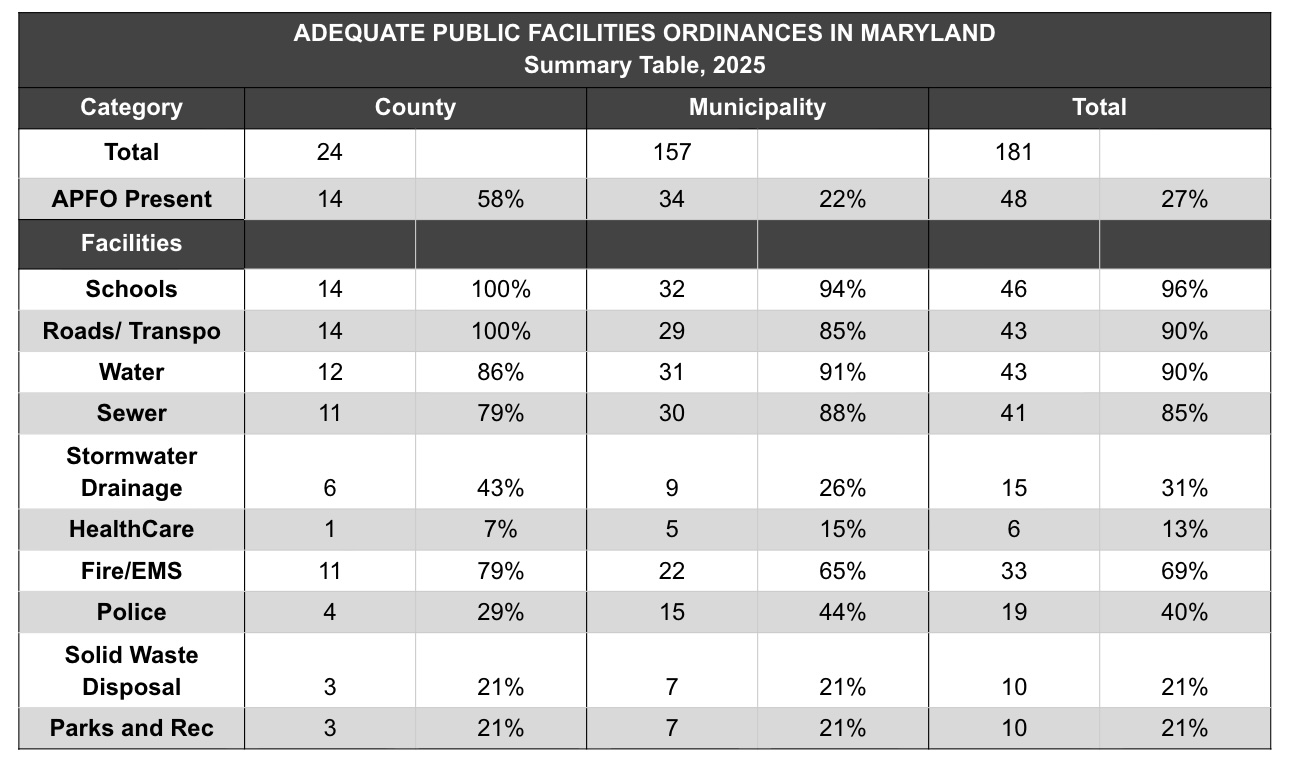
Table 1: Summary of 2025 Maryland APFO Inventory.
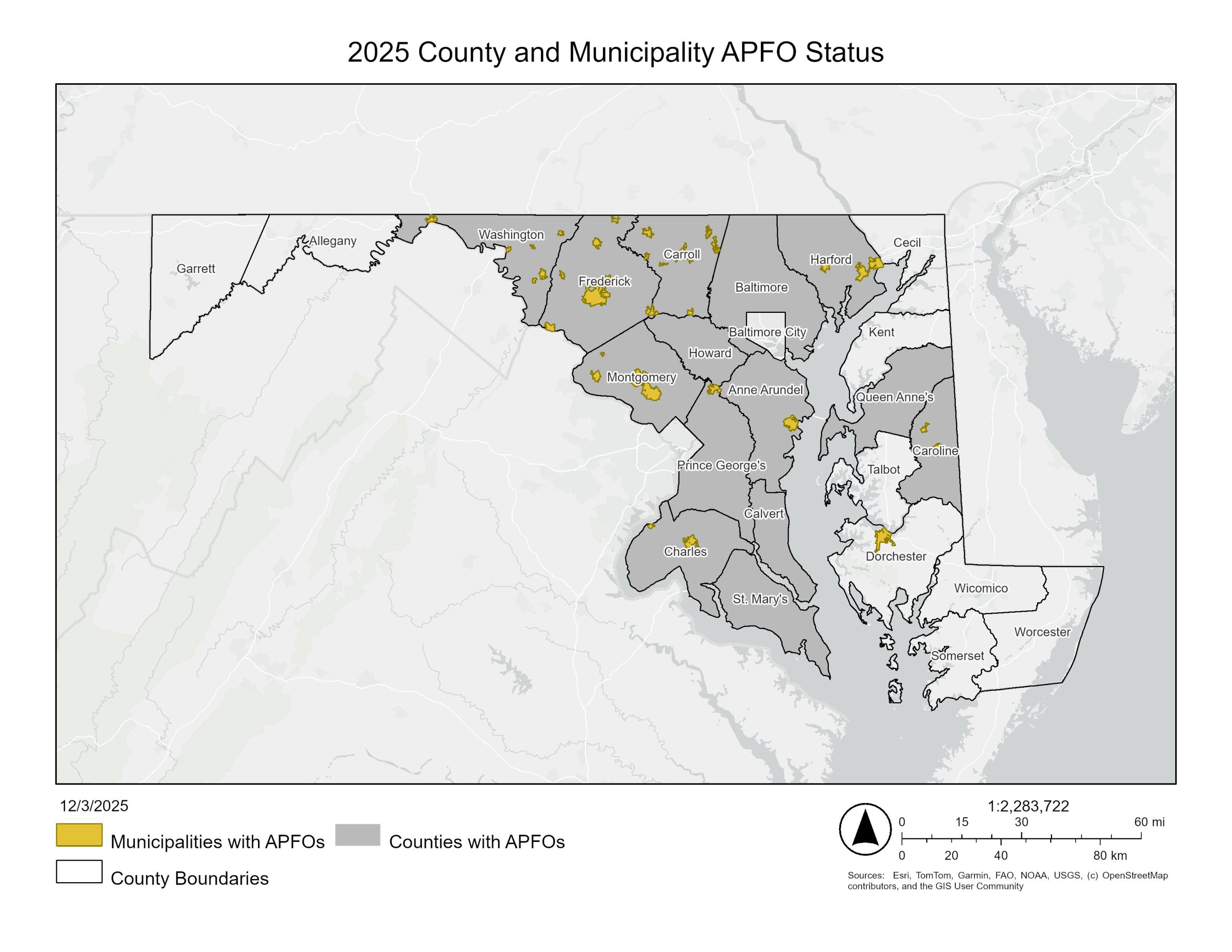
Figure 1: Map of Maryland Jurisdictions with APFOs, 2025.
All counties in the Baltimore-Washington metropolitan region have APFOs, which may reflect higher growth pressures. Baltimore City and the farthest western, northeastern, and southeastern portions of the State do not have APFOs. In these areas, there may be lower growth pressures, different growth patterns, or reliance on other tools to manage capacity and growth. Most municipalities with APFOs fell within counties that also have them, with the exception of Cambridge in Dorchester County. Additional tables summarize the timing of adequacy tests, exempted developments, and the level of service standard for each facility. These tables can be accessed in the full report. For example, the most commonly exempted developments are nonresidential and commercial development, age-restricted housing, minor subdivisions, mixed-use development, affordable housing, and low-traffic-producing subdivisions.
Findings on Housing Outcomes
Research shows that APFOs have mixed relationships with housing outcomes. When poorly coordinated with capital improvement plans, APFOs can restrict housing supply: in the Baltimore-Washington suburbs, falling housing starts and building moratoria were attributed to APFOs. However, studies in California found neutral or positive relationships with housing production.
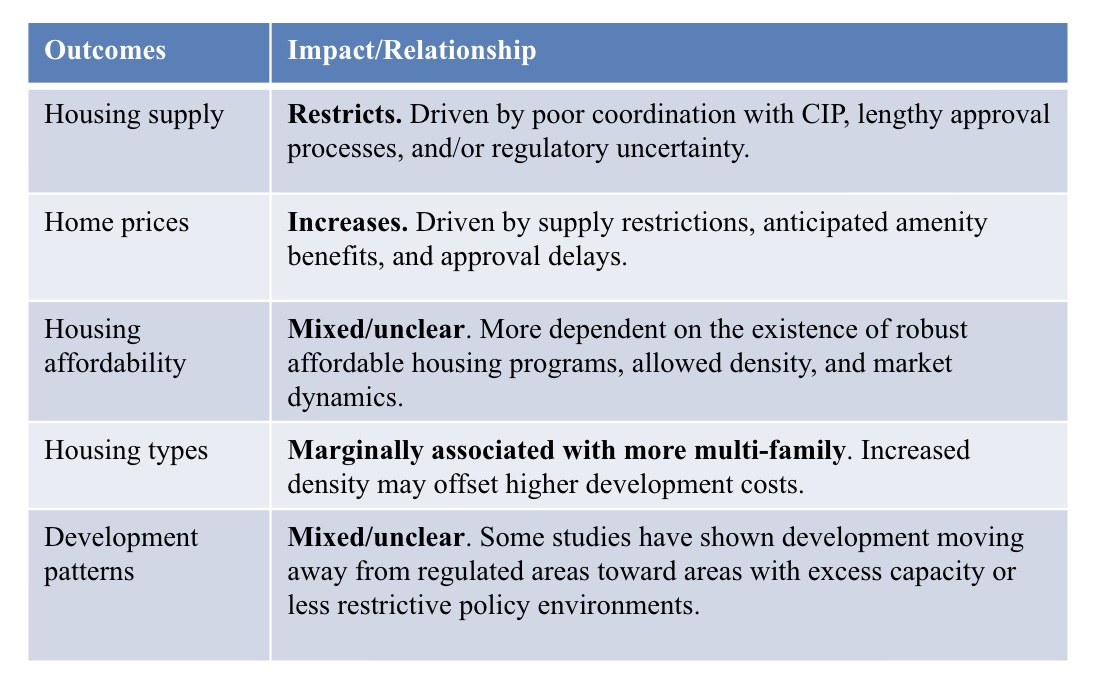
Table 2: Summary of the Relationship between APFOs and Five Housing Outcomes.
Studies consistently show that APFOs are correlated with increased housing prices when they reduce housing supply, delay development approvals, and signal anticipated amenities improvements. For example, an APFO policy announcement in Cabarrus County, North Carolina increased existing single-family home prices by 2.3%. Other studies in Florida and California have produced similar findings. Despite this finding, APFOs have been found to have neutral or minimal effects on housing affordability; market dynamics, inclusionary zoning, and density regulations have been found to be stronger predictors of housing affordability.
One study found that APFOs were marginally associated with more multi-family housing. Yet, APFOs’ influence on broader development patterns is more ambiguous: some studies have found little to no effect on their contribution to sprawl, while studies in Maryland and Florida have found that APFOs can deflect development to less developed areas or areas with less restrictive development environments. Overall, the effects of APFOs depend on how well they align with capital improvements planning, regional market dynamics, and other land-use policies.
Schools and APFOs
In Maryland, school adequacy requirements have previously driven most residential development moratoria, yet some research suggests that such restrictions may do little to address school overcrowding. In Montgomery County, most enrollment increases stemmed from turnover in existing units rather than people moving into new housing, and similar trends have been observed in Howard County. In response, Montgomery County replaced the school capacity requirements with a payment system to support school construction.
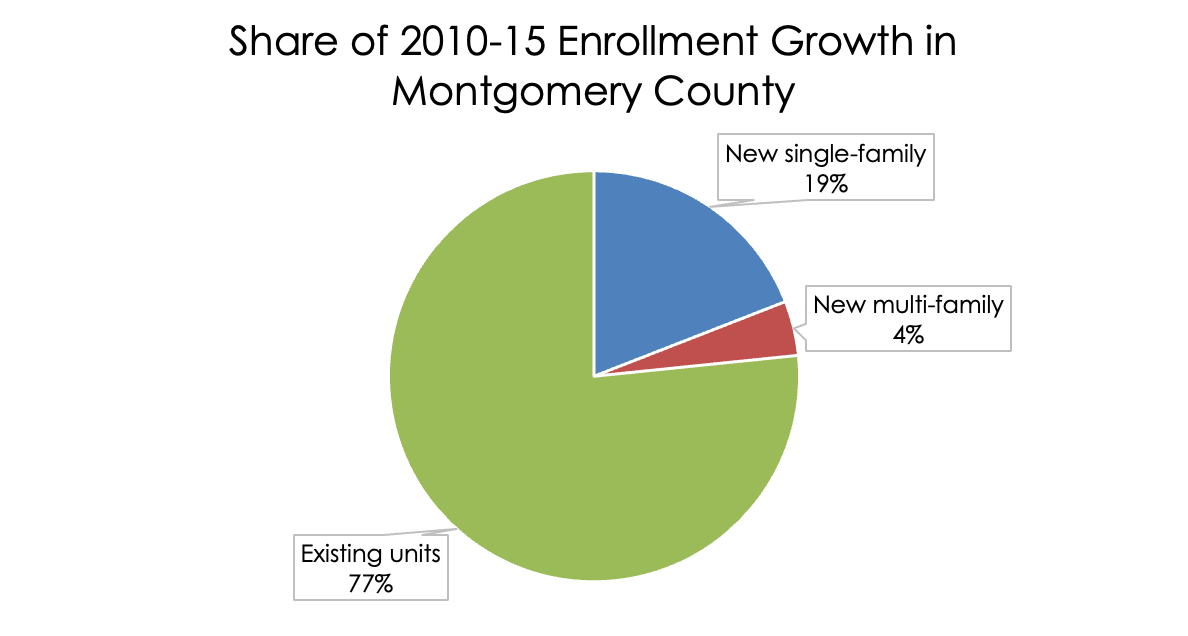
Figure 2: Share of 2010-2015 Student Enrollment Growth in Montgomery County by Development Type. Source: 2020-2024 Growth and Infrastructure Policy Update Montgomery Planning.
APFOs also raise equity concerns: in Howard County, stricter school capacity tests have made it harder to build housing for low- and middle-income families and have been used to delay conversations about redrawing school boundaries, undermining school integration efforts. Potential solutions to overcapacity, such as portable classrooms, new construction, and redrawing school boundary lines each come with drawbacks. Temporary or relocatable classrooms are quick and inexpensive, but are criticized for poor environmental conditions; new school construction is optimal but slow and costly; and redrawing school boundary lines can be politically fraught, as many families choose neighborhoods based on school assignments. Boundary changes can also expose underlying racial and socioeconomic tensions and raise practical concerns about student transportation.
Best Practices
Nine best practices were developed for local governments to ensure APFOs support housing needs, equitable development, and other growth management goals. Each of these can be explored more in the full report:
- Clarify the purpose of APFOs and reconsider their use if necessary
- Integration with comprehensive plan
- Integration with capital improvements programming and plans
- Tailored to support multimodal transportation
- Collaborate to update school planning and capacity management
- Develop a variety of alternatives to adequacy
- Improve adequacy calculations and provide access to adequacy information
- Coordinate within and between jurisdictions
- Align and combine with affordable housing initiatives
Webinar
In December 2025, Sarah presented the findings from this report at a webinar hosted by the Maryland Department of Planning (MDP) titled “Designing Adequate Public Facilities Ordinances (APFOs) for Sustainable Growth”. Sarah was joined by David Dahlstrom, AICP from MDP; Jason Groth, AICP and Melissa Hively from Charles County; and Eric Leshinsky, AICP from Annapolis. The webinar is available for viewing on MDP’s website (click here to watch the webinar).
Click here to read the full report.